Understanding hip tendon degeneration and non-surgical treatment options
Hip tendinopathy — degeneration of the tendons supporting the hip — is a leading cause of chronic hip pain in active adults. TenJet® percutaneous tenotomy offers a targeted, non-surgical solution for patients who haven't responded to conservative care.
Find a Specialist Learn About the ConditionPatient Experience
Chronic tendinopathy responds poorly to rest alone. Here a TenJet patient describes what treating the tissue directly did for them.
TenJet Patient Testimonial
Video courtesy of HydroCision, Inc., the maker of TenJet®. Individual results vary; this patient's experience is not a guarantee of outcome. Talk with a specialist about whether the procedure is appropriate for you.
The hip is surrounded by several major tendons, any of which can develop tendinopathy. The location and character of your pain helps identify which tendon is involved.
Degeneration of the gluteus medius or minimus tendons. Lateral hip and buttock pain, worse lying on the affected side.
Iliopsoas tendon degeneration. Anterior hip and groin pain, often worsened by running or stair climbing.
Degeneration at the hamstring origin on the sitting bone. Deep buttock pain with sitting and forward bending.
Groin pain from degeneration of the adductor longus or brevis tendons at their pelvic attachment.
TenJet® by HydroCision offers a minimally invasive solution for hip tendinopathy by directly removing degenerated tendon tissue. The procedure is performed in office under local anesthesia, guided by real-time ultrasound.
Official TenJet® information: hydrocision.com/product/tenjet/
Official demonstration video from HydroCision, the maker of TenJet, plus a look at how tendinitis differs from the deeper tissue degeneration TenJet is designed to treat.
TenJet Gluteal Tendinopathy Minimally Invasive Tenotomy


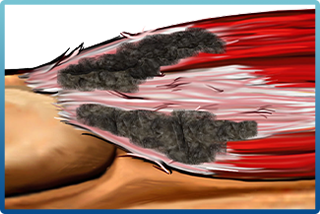
Diagrams and video courtesy of HydroCision, Inc.
Common Questions
An umbrella term for a painful, malfunctioning tendon. It covers both the inflammatory picture and the chronic degenerative one, which matters because those respond to different treatments.
Outer hip pain is commonly attributed to bursitis or the lower back first. Tendon degeneration is often identified only after those assumptions have been tested and treatment has not helped.
Usually yes, with modification. Continued loading in a controlled way is often preferable to complete rest, but the specifics should come from a clinician who has assessed you.
Published follow-up shows sustained improvement in treated tendons. Long-term outcome also depends on managing the loads and habits that contributed to the degeneration originally.
This information is general and is not medical advice. Whether any procedure is appropriate for you can only be determined by a physician who has examined you and reviewed your imaging.